Finding the perfect pair of everyday wireless earbuds often feels like balancing trade-offs. Some deliver exceptional active noise cancellation but feel like bulky stones inside your ear canals. Others boast pristine audiophile acoustic clarity but drop the connection whenever you walk past an urban cell tower.
When Sony launched the successor to its legendary WF-1000XM4, the expectations were sky-high. In this comprehensive Sony WF-1000XM5 review, we break down real-world testing across several weeks of daily commutes, long-haul travel, intense gym sessions, and home office setups.
Does Sony’s latest flagship warrant its premium price tag? Let’s find out.
Quick Verdict & Review Scorecard
| Evaluation Metric | Score | Key Takeaway |
| Acoustic Fidelity | 9.8 / 10 | Rich, detailed sound profile with outstanding LDAC performance |
| Active Noise Cancellation | 9.7 / 10 | Blocks airplane engine rumbles and cafe chatter with ease |
| Ergonomics & Fit | 9.2 / 10 | 25% smaller chassis; far more comfortable than the XM4 |
| Call Quality | 8.8 / 10 | AI bone-conduction mics handle outdoor wind surprisingly well |
| Battery Endurance | 9.4 / 10 | Reliable 8 hours of playback with ANC enabled |
| Overall Score | 9.4 / 10 | Editor’s Choice: Best Overall Wireless Earbuds for Android |
Technical Specifications at a Glance
| Specification | Hardware Details |
| Driver Unit | 8.4 mm Dynamic Driver X |
| Processors | Integrated Processor V2 & HD Noise Cancelling Processor QN2e |
| Bluetooth Version | Bluetooth 5.3 (LE Audio compatible) |
| Supported Codecs | LDAC, LC3, AAC, SBC |
| Microphone Setup | 3 microphones per earbud with bone conduction sensors |
| Battery Life | 8 hours (ANC On), 12 hours (ANC Off), 24 hours total with case |
| Fast Charging | 3-minute quick charge yields up to 60 minutes of playback |
| Water Resistance | IPX4 (Splash & sweat resistant) |
| Weight | 5.9 grams per earbud (Chassis weight: 39 grams) |
1. Design, Build Quality, and Everyday Fit
The biggest criticism directed at the previous generation was bulkiness. If you wore the XM4 for longer than an hour, ear fatigue was almost guaranteed.
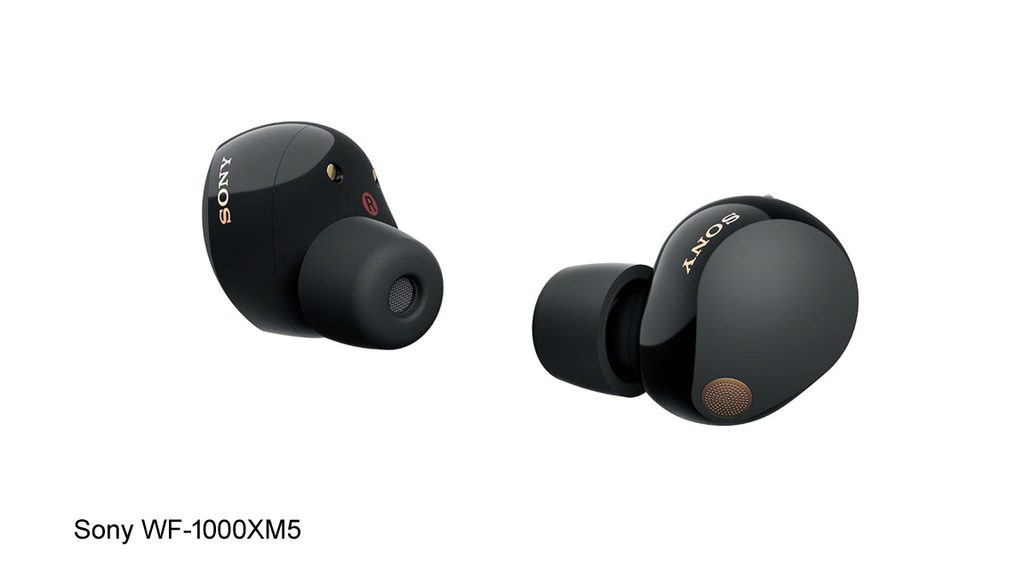
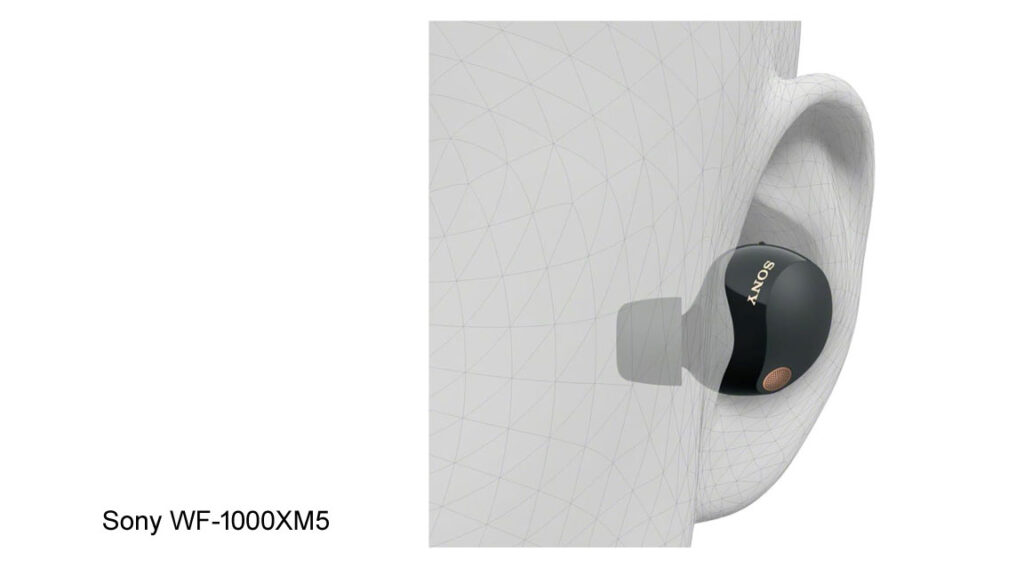
In this Sony WF-1000XM5 review, the most noticeable upgrade is physical: Sony reduced the overall footprint by 25% and shaved the weight down by 20%. At just 5.9 grams per earbud, they sit much deeper and more flush against your concha.
Sony WF-1000XM4 vs WF-1000XM5 (Chassis Comparison)
– WF-1000XM4: 7.3 grams | Bulkier profile | Matte exterior
– WF-1000XM5: 5.9 grams | 25% smaller body | Glossy sides / Matte touch panel
The New Glossy Finish
Sony opted for a hybrid aesthetic: the outer touch sensor retains a clean matte texture, but the curved perimeter has a glossy, polished finish. While it looks sleek, the slick texture can make extracting the earbuds from their magnetic case a bit tricky if your hands are damp or cold.
Polyurethane Foam Tips: Why They Matter
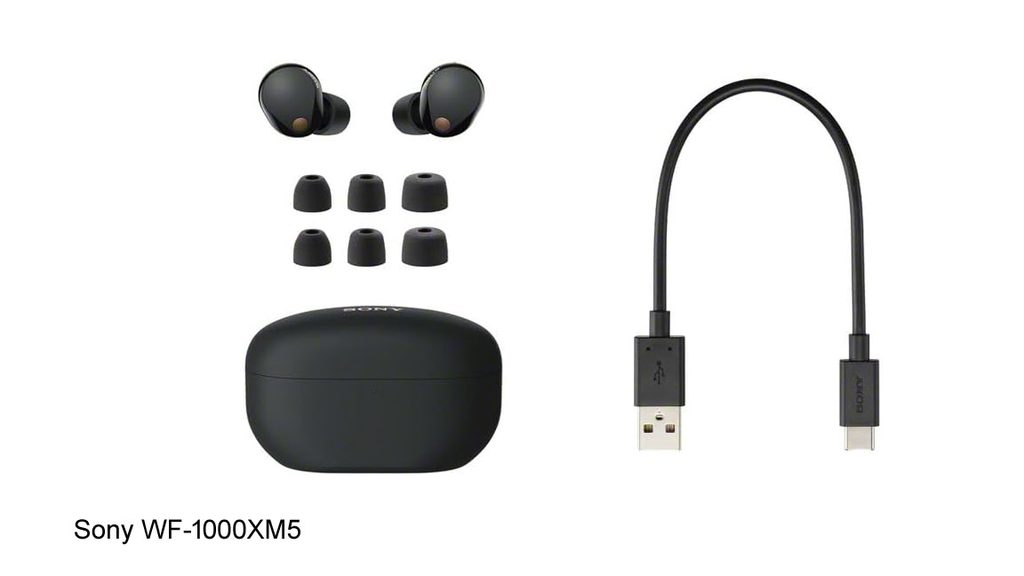
Unlike Apple or Bose, which rely on standard silicone tips, Sony equips the XM5 with proprietary polyurethane memory foam tips (available in XS, S, M, and L).
- The Benefit: You compress the foam before inserting the bud into your ear canal; it slowly expands to create an airtight acoustic seal.
- The Reality: It provides unmatched passive noise dampening, though users with very narrow canals might need a couple of days to adapt to the pressure.
2. Audio Quality & Acoustic Performance
To conduct a fair Sony WF-1000XM5 review, we tested audio playback across multiple genres—from complex orchestral suites on Tidal to synth-heavy EDM and vocal-forward podcasts on Spotify.
The WF-1000XM5 replaces the previous 6mm driver with a larger 8.4mm Dynamic Driver X, combining a rigid dome with a soft, pliable edge.
Low-End Response (Bass)
The low end is punchy, responsive, and disciplined. Sub-bass rumbles in tracks like Hans Zimmer’s Time remain deep and atmospheric without bleeding into the mid-frequencies. It is not an artificially boosted, muddy bass; it is precise and textured.
Midrange (Vocals & Instruments)
Vocals step forward with natural warmth. Acoustic guitars and piano keystrokes display impressive separation. Listening to Fleetwood Mac’s The Chain, every subtle layer of vocal harmony is discernible across the soundstage.
Treble (High Frequencies)
Highs are transparent without introducing harsh sibilance or ear-piercing fatigue at louder volumes. The transient response is fast, giving hi-hats and cymbals a crisp, organic snap.
The LDAC Advantage on Android
If you use an Android smartphone, enabling LDAC in your Bluetooth settings transmits audio at up to 990 kbps (nearly triple the data rate of standard SBC/AAC). Streaming high-resolution 24-bit/96kHz tracks brings these earbuds noticeably close to wired studio monitors.
3. Active Noise Cancellation (ANC) Testing
Active noise reduction has long been Sony’s signature domain. The XM5 features dual dedicated chips: the QN2e Noise Cancelling Processor working in tandem with the Integrated Processor V2, fed by three precision microphones on each earbud.
Real-World Travel & Commute Test
- Airplane Engines & Subways: Low-frequency mechanical hums are eliminated almost entirely. On a long-haul flight, engine drone fades into a faint whisper once music plays at 30% volume.
- Cafe Chatter & Keyboard Clatter: Mid-frequency sounds (human voices and mechanical keyboards) are traditionally tough for ANC algorithms to handle. Thanks to the foam tips working together with the QN2e processor, the XM5 attenuates background conversation significantly better than its predecessor.
Transparency (Ambient Sound) Mode
Sony’s ambient pass-through mode sounds clean and natural. You can easily hold a conversation with a barista without removing the earbuds. The Speak-to-Chat feature automatically pauses playback and opens up ambient sound the second you start talking.
4. Microphone Clarity & Voice Calls
One common issue with earlier models was muffled call quality in noisy environments. For this Sony WF-1000XM5 review, we conducted phone calls along windy streets and in crowded train stations.
Sony uses deep neural network (DNN) algorithms trained on over 500 million voice samples, paired with a bone-conduction sensor that detects when your jaw moves.
- Quiet Rooms: Your voice comes through warm, natural, and free of distortion.
- Windy Outdoors: Wind noise is dampened effectively by the recessed outer microphone mesh. While background noise suppression can slightly compress your vocal tone, your voice remains clear and intelligible on the other end.
5. Battery Life & Charging Performance
Battery endurance remains a strong selling point for Sony compared to rivals like Bose and Apple.
- ANC Enabled: We consistently measured between 7.5 and 8 hours of playback at 60% volume over standard codecs (roughly 6 hours when pushing maximum 990 kbps LDAC transmission).
- ANC Disabled: Expect a solid 11 to 12 hours on a single charge.
- Charging Case: Holds two full recharges, bringing total battery life to 24 hours with ANC on and 36 hours with ANC off.
Fast Charging & Wireless Convenience
- A quick 3-minute top-up via the USB-C port provides about 60 minutes of listening time.
- The case fully supports Qi wireless charging, meaning you can place it on any charging pad or use reverse wireless power-sharing from a compatible phone.
6. Software & Android Ecosystem Features
The companion Sony Headphones Connect app (available on Google Play) is one of the most comprehensive audio apps on the market.
Key features include:
- Google Fast Pair: Instant pairing with any modern Android device the moment the case opens.
- Bluetooth Multipoint: Seamlessly connect two devices at the same time—take a phone call on your phone, then resume streaming a YouTube video on your tablet.
- 5-Band Equalizer + Clear Bass: Customize your sound profile or save multiple custom EQ presets.
- Adaptive Sound Control: Automatically changes noise cancellation modes based on whether you are sitting, walking, or commuting.
Sony WF-1000XM5 vs Competitors
How does the XM5 stack up against the competition?
Flagship Audio Comparison:
– Sony WF-1000XM5 : Best overall acoustic balance + LDAC high-res audio
– Bose QC Ultra : Highest absolute ANC attenuation, slightly less detailed sound
– Pixel Buds Pro 2 : Best native Google AI features, smaller driver size
| Feature | Sony WF-1000XM5 | Bose QuietComfort Ultra | Google Pixel Buds Pro 2 |
| High-Res Codec | LDAC (990 kbps) | aptX Adaptive | Standard AAC / SBC |
| Battery (Buds) | 8 Hours | 6 Hours | 8 Hours |
| Water Resistance | IPX4 | IPX4 | IP54 |
| Wireless Charging | Built-in Qi | Requires extra accessory | Built-in Qi |
| Sound Signature | Balanced & Audiophile | Warm & Bass-forward | Balanced & Energetic |
Pros and Cons
Pros
- Reference-level audio fidelity with expansive dynamic range and deep bass control
- LDAC high-resolution codec delivers near bit-perfect wireless audio on Android
- 25% smaller chassis dramatically reduces ear canal fatigue
- Class-leading battery life (8 hours continuous with ANC)
- Foam ear tips provide superior passive isolation
- Reliable multipoint pairing between phones and laptops
Cons
- Glossy exterior edges can make the earbuds slippery to grasp
- Foam ear tips require rolling and proper placement to ensure a complete seal
- Premium pricing puts them near the top of the price range
Frequently Asked Questions (FAQ)
Is the Sony WF-1000XM5 worth upgrading from the WF-1000XM4?
Yes. If you found the XM4 too bulky or experienced ear fatigue during extended use, the XM5’s smaller profile and reduced weight make a major difference. The upgraded QN2e processor and refined driver system also provide cleaner highs and more natural voice calls.
Can I use the Sony WF-1000XM5 for working out?
Yes. With an IPX4 rating, the earbuds handle sweat and light rain droplets without issues. However, because memory foam tips absorb moisture over time, consider wiping them dry after intense workouts.
Does the Sony WF-1000XM5 work well with non-Sony Android phones?
Absolutely. Features like Google Fast Pair, LDAC streaming, Multipoint connections, and the Sony Headphones Connect app work identically across Samsung, Google Pixel, OnePlus, and other Android devices.
Final Verdict: Should You Buy the Sony WF-1000XM5?
To conclude this Sony WF-1000XM5 review, Sony has successfully addressed nearly every drawback of its predecessor. By shrinking the body, refining the driver architecture, and integrating dual processing chips, they built an earbud that excels in sound fidelity, active noise cancellation, and battery longevity.
If you want an exceptional all-round listening experience on an Android smartphone, the Sony WF-1000XM5 remains the industry benchmark.
“Read our complete roundup of the Best Wireless Earbuds for Android to see how the XM5 compares across the broader portable audio landscape.”